Longarm Quilting Questions
Helpful information for sending your quilt top to the studio.
-
How does your pricing work?
Pricing is based on cents per square inch (p.s.i.) and starts at $.02 p.s.i. and can go up to $.06 p.s.i. depending on the type of quilting desired.
-
How long does it take to quilt my quilt?
It all depends on the size of the quilt, but as a general rule, small (crib size) quilts to small queen quilts can be finished in a day. Larger queen to king size quilts can take two days for pantographs.
Custom quilting can take anywhere from two to four days or longer depending on complexity.
-
How big should my backing be?
Backings should be 6 to 8 inches larger than the quilt top on all sides to allow for loading and straightening on the longarm frame.
Ready to schedule a quilt?
Hours are by appointment only. Reach out to the studio with your quilt top size, desired quilting style, and ideal completion date so we can confirm availability.
When preparing a quilt top for longarm quilting, there are a few helpful steps to consider before reaching out. Pressing all seams flat and trimming loose threads ensures the fabric lies smooth and ready for the machine. A well-pressed quilt top allows the quilter to focus on the pattern rather than fussing with wrinkles or bulky intersections. Backing fabric should be several inches larger than the top on all sides, and batting should be chosen based on the desired warmth and drape. Taking time with these preparations helps the process run smoothly and leads to a finished quilt that looks its best.
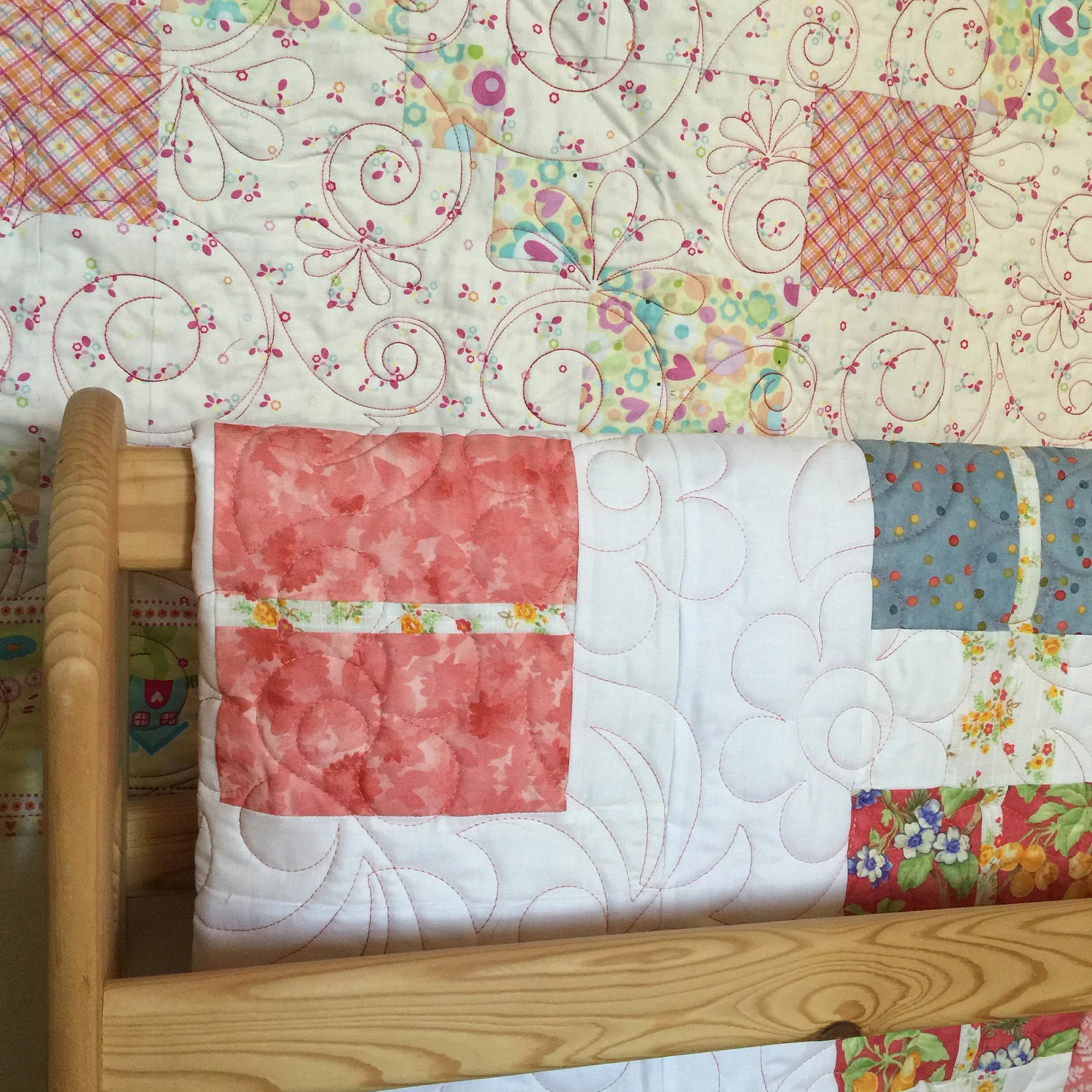
Choosing a quilting pattern is one of the most enjoyable parts of the process. Some quilters prefer all-over designs like loops or meanders, which add texture without overwhelming pieced blocks. Others choose custom patterns that highlight specific areas of a quilt, such as stitching around individual stars or echoing the lines of a stained glass design. The style of quilting can dramatically change the final look of a project, from soft and cozy to crisp and structured. Sharing reference images or describing the feel you want helps the quilter select the right motif for your work.
Understanding quilting terminology can make communication easier when discussing your project. Terms like stitch in the ditch, edge to edge, and custom quilting describe different approaches to how the needle moves across the quilt top. Loft refers to the thickness of batting, while density describes how closely the quilting lines are spaced. Knowing these basics helps you articulate what you envision for your finished piece. Whether you are a seasoned quilter or just beginning to explore the craft, clear communication ensures that your project turns out exactly as you imagined.
Many quilters wonder about turnaround time for longarm services. The timeline depends on several factors, including the size of the quilt, the complexity of the chosen pattern, and the current workload in the studio. Simple all-over designs on smaller quilts generally move more quickly than intricate custom work on large bed-sized projects. Planning ahead and reaching out well before a gift deadline or special event is always a good idea. The studio aims to provide realistic estimates so that every project receives the attention it deserves without unnecessary rush.